
Day after day, front porch after front porch, I’m still exploring the world. But these landscapes are a little different from my previous travels.
I find myself on a journey that I never imagined being on in a million years.
But here I am, first in Arizona, and now in Georgia, knocking on strangers’ doors, talking to them about issues that are impacting their lives and our collective experience as US citizens.
For 8 hours a day, 6 days a week, house after house, I approach front porch after front porch, and I raise my hand to knock on front door after front door.
And I wait.

I wait on a strangers’ front porch to see who and what will present itself.

I bring all of my hope for a better future and faith in our collective power to create the world we want to live it. I bring encouragement and information to make it easier for people to make their voices heard.
But will someone answer the door, or will I just be greeted by their barking dogs? (Some days I talk to more dogs than I do voters.)

Will I hear movements and voices quiet down as the people inside pretend they aren’t home?
Will they answer the door, puffing up their chest as if to defend their territory against enemy attack, and yell at me to go away, as if my approach to their personal space bubble was a threat to their very existence?
Or will the welcome me, ask me questions, and even thank me for what I’m doing?
Will they cuss at me angrily from inside as if I had personally offended them by knocking on their door? Or run outside yelling and call the cops on me?
Or will they be interested to engage in dialogue about our diverse collective experience in this country, and how we might make it better (whether we agree or not).
Maybe they will be the person who wasn’t going to vote, didn’t feel like their voice mattered, and needed a nudge to feel empowered.
Maybe they are the person who accidentally threw away their absentee ballot and needed to know where and when they could go vote in person.
Maybe they are the overwhelmed parent who just wouldn’t have made time to vote if I hadn’t been there to help them make a plan and send them a reminder text.
Maybe they are the first-time voter that didn’t know how or when to vote, and will thank me profusely for helping them to participate in American democracy for the first time.
It is for these last few people that I keep walking and keep knocking. I take those blows from the unwelcoming doors, so that I can find those people that benefit from my work – thankful for the reminder to vote, thankful for the information about where and when they can vote, thankful to talk about how policies are affecting their lives and to hear about alternative policies that could improve our collective American experience.

I keep knocking, sometimes annoying the #*@ out of people, getting yelled at, trying to extract people from their routines to make time to vote – not just for them, certainly not just for me, but for all of us, including the people who can’t vote – future generations that will be impacted by today’s policies, the disenfranchised, those who have passed away due to irresponsible response to the pandemic.

I do it to stand up against the racism and classism that wears on in our society, changing shape but persisting. I do it to fight against the voter suppression that our history books led us to believe no longer exists, and that some call “protection against voter fraud” despite studies showing that voter suppression is much more prevalent than voter fraud.

I do it for those that fled their country of origin to seek refuge only to have their basic human rights violated here in my country too.
I do it to fight against corruption and lies in their most blatant form, because I have seen how it breaks apart communities and cripples democracy. And as a kind of personal project, I knock to try to provide an alternative perspective for those who are only taking in the propaganda saturating our politics worse than ever before in my lifetime, and I recommend reliable information sources.
And I do it for my fellow teammates, who are far from family and friends for the holidays. Each one also pounding the streets for 8 hours a day, 6 days a week. Pouring out their hearts to strangers, working to make this country better for their families, friends, and fellow citizens.


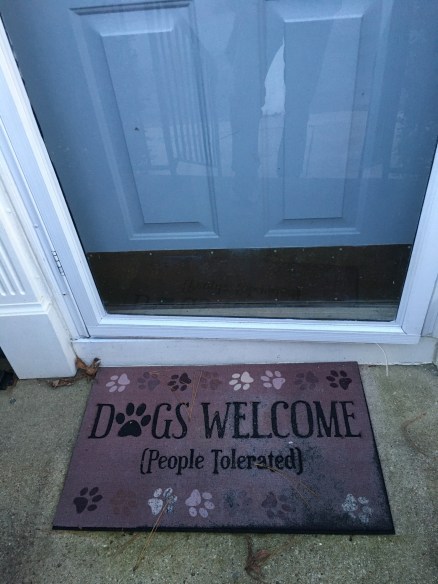
As I approach a front porch, I take in my surroundings, and often a personal touch made to the yard or front porch makes me smile. Ironically, sometimes the most unwelcoming responses come from the front porches with the extremely sunny “Welcome!” mats. And some of the most pleasant interactions have come from people with front porches adorned with, “Go Away”.
So as I come to the close of this great adventure, as always, I will share some of the great landscapes from this journey.




 These archeological sites are located in and around a small, rural farming town of about 11,000 people, called San Agustin. People come from all over the world to see the statues, which are located in many different sites dispersed throughout the region. You can see many statues and archaeological sites in the archaeological park just outside the city center, but many more sites are farther from the urban center, and are more commonly accessed by rides in van, jeep, or on horseback.

 When I was there, the majority of tourists were actually Colombians, (a change in the norm due to the holiday season when people have vacations). It was especially cool to hear so many different people excited to learn about the history and geography of their country. (And I was really impressed with the couple from Cúcuta,* who were there with their three year-old, doing the day tour to see the statues, tombs, and waterfalls.)

 I happened to arrive just when the family was preparing to host the novena that night. And that is how I learned what a novena was.
I arrived at the same time that extended family members were arriving and gathering on the patio outside the kitchen. While cooking my dinner, I listened as they took turns reading passages and later singing along to (religious) Christmas songs from the stereo while adding some spice with maracas and shakers. After the extended family left, they invited me to eat my dinner at the table with them, and I learned that they celebrate novenas for the nine days leading up to Christmas, alternating houses that host it each night.
Over the few days that I was there, the family became like my Colombian family. They invited me to one of the novenas, let me help milk a cow, and drove me around town to see the Christmas lights and the town’s annual nativity scene. (San Agustin boasts to have the largest pesibre, or nativity scene, in all of Colombia. (They say it used to be the biggest in the world.) It includes 20-50 different outdoor “rooms”, each with different scenes made of life-size mannequins. Some are a depiction of a part of the Christmas story from the bible, while others depict historic life in San Agustin, but most are a mixture of the two, sponsored by a local business promoting its products or services.)
I happened to arrive just when the family was preparing to host the novena that night. And that is how I learned what a novena was.
I arrived at the same time that extended family members were arriving and gathering on the patio outside the kitchen. While cooking my dinner, I listened as they took turns reading passages and later singing along to (religious) Christmas songs from the stereo while adding some spice with maracas and shakers. After the extended family left, they invited me to eat my dinner at the table with them, and I learned that they celebrate novenas for the nine days leading up to Christmas, alternating houses that host it each night.
Over the few days that I was there, the family became like my Colombian family. They invited me to one of the novenas, let me help milk a cow, and drove me around town to see the Christmas lights and the town’s annual nativity scene. (San Agustin boasts to have the largest pesibre, or nativity scene, in all of Colombia. (They say it used to be the biggest in the world.) It includes 20-50 different outdoor “rooms”, each with different scenes made of life-size mannequins. Some are a depiction of a part of the Christmas story from the bible, while others depict historic life in San Agustin, but most are a mixture of the two, sponsored by a local business promoting its products or services.)
 This was one of those really special places where I felt a real connection with the place and the people, so much so that it was kind of hard to leave. I had similar feelings about my experience in Amantaní, the island on Lake Titicaca, and coincidentally I had a similar mystical “despedida” (farewell) with nature. My last morning in Amantaní, a hummingbird came and hovered close my face looking at me for a few seconds, while here in San Agustin, just before I left, a butterfly landed on my face and remained for nearly a minute, giving me a goodbye hug and kiss.
 Famous Footnotes:
*Cuceta is a border town with Venezuela, located on the other side of country. This family of three (a lawyer and an engineer) had literally traveled across the country to visit San Agustin.
**Fun fact: In San Agustin, I saw many guys sporting Mohawk-like haircuts- something I haven’t seen anywhere else in my South American travels so far.
Famous Footnotes:
*Cuceta is a border town with Venezuela, located on the other side of country. This family of three (a lawyer and an engineer) had literally traveled across the country to visit San Agustin.
**Fun fact: In San Agustin, I saw many guys sporting Mohawk-like haircuts- something I haven’t seen anywhere else in my South American travels so far.


